Dismissed worker cannot be served chargesheet, rules HC
Punjab & Haryana HC rules former employee cannot receive new chargesheet
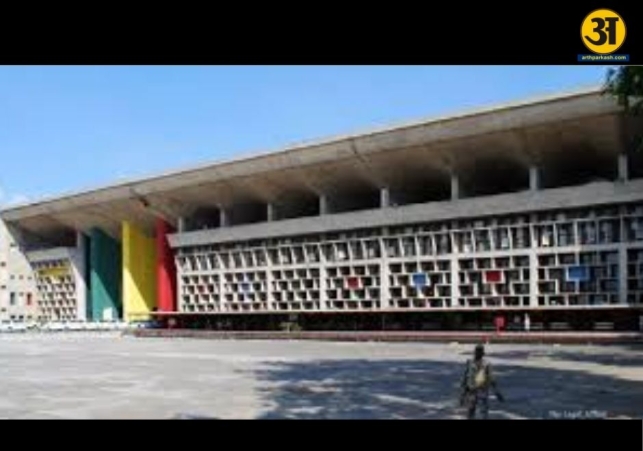
The Punjab and Haryana High Court has ruled that disciplinary proceedings cannot be initiated against an employee after they have been dismissed and their service relationship with the employer has ended. The court quashed three charge sheets issued in 2017 to Suresh Jindal, a former employee of the Punjab State Civil Supplies Corporation, stating that once an employee is legally separated from service, they are no longer under the employer’s disciplinary control.
Suresh Jindal, at the time a grade-2 inspector, was dismissed from service in October 2013 after being convicted under the Prevention of Corruption Act by a court in Moga. Despite his dismissal, the corporation issued three charge sheets against him and started departmental inquiry proceedings in 2017. Jindal challenged this decision in the high court in 2018.
Justice H.S. Brar, hearing the case, emphasized that disciplinary authority is valid only while an individual is an active employee. “The moment a legal separation occurs, whether through dismissal, resignation, removal, or any other form of termination, the individual ceases to be subject to the employer’s disciplinary control,” the court said. Any attempt to extend this relationship after termination cannot be justified through assumptions, legal fiction, or mere “deeming provisions” without clear legal support.
The court explained that rules permitting inquiries after retirement or dismissal, such as withholding pensionary benefits, must be explicitly stated. In Jindal’s case, these rules did not apply because he was not eligible for a pension. The Punjab Civil Service (Punishment and Appeal) Rules, 1970, which the corporation cited, only allow penalties to be imposed on an active government employee. Since Jindal had already been dismissed, the corporation had no authority to issue charge sheets in 2017.
Legal reasoning behind the ruling
The court further clarified that severance of the employment relationship removes the employer’s jurisdiction to initiate disciplinary proceedings. “Any attempt to start fresh proceedings against a former employee is void from the beginning, ultra vires, and without legal sanction,” it said. This is because the foundation of disciplinary action—the master-employee relationship—ceases to exist after dismissal.
The corporation had argued that Punjab Civil Service Rules permit withholding or withdrawing pension after retirement. The court rejected this argument, noting two key points: first, Jindal was not entitled to pension as a corporation employee, and second, the rules regarding pension can only be invoked for employees who are eligible. They do not allow the issuance of new charge sheets or a full departmental inquiry against someone already dismissed.
The court emphasized that laws and rules must clearly define any extension of disciplinary authority after termination. In the absence of explicit statutory backing, actions such as issuing charge sheets after dismissal are invalid. The judgment reinforces the principle that disciplinary control is linked directly to the ongoing employment relationship and cannot be arbitrarily extended.
Justice Brar also stressed that the disciplinary process is meant to ensure accountability while the employee is in service. After dismissal, the employee’s legal status changes, and the employer cannot take retroactive disciplinary action for any reason other than those explicitly allowed by law. Attempts to do so are considered void and unenforceable.
ALSO READ: The AI boom: innovation surge or bubble waiting to burst?
ALSO READ: The fall of the Berlin Wall: A turning point that reshaped global politics
Impact and significance of the verdict
This ruling is significant because it clarifies the limits of employer authority in post-employment cases. Employers, including government corporations, cannot issue disciplinary notices to former employees without specific legal provisions. The judgment protects former employees from harassment and ensures that disciplinary rules are not misused after service termination.
For Suresh Jindal, the court’s decision provides relief from the three charge sheets and departmental inquiry notices issued in 2017. It also establishes that the employer’s disciplinary powers cannot extend beyond the period of active employment unless explicitly stated in law. This protects employees from arbitrary actions and reinforces legal certainty in employment matters.
Experts say the ruling serves as an important precedent for other cases where employers attempt to initiate disciplinary action after dismissal. It underlines that clear legal backing is necessary for any inquiry post-termination, and in the absence of such provisions, actions against former employees are automatically invalid.
The judgment also highlights the careful distinction between current employees and former employees. While disciplinary procedures and investigations are valid for active employees, once a person is dismissed, removed, or resigns, they are legally free from the employer’s disciplinary jurisdiction. Only in cases explicitly covered by statute, such as pension-related inquiries for eligible employees, can any action continue after service ends.
In conclusion, the Punjab and Haryana High Court has reinforced a fundamental principle of employment law: an employee who has been legally dismissed cannot be subjected to new disciplinary proceedings. The decision clarifies the limits of employer authority, prevents misuse of disciplinary processes, and protects the rights of former employees. By quashing the charge sheets and departmental inquiry notices issued to Suresh Jindal, the court has sent a clear message that employer-employee relationships, once severed, cannot be arbitrarily extended through post-termination disciplinary action.
Related News